 Skip to content

Congratulations! You’re on your way to a new smile.
Your orthodontist has given you your first set of aligners. Below are the use and care instructions for you to follow. You will receive additional aligners at regular intervals, according to your treatment plan, until completion.
By following our instructions carefully, you will be showing off your new smile in no time!
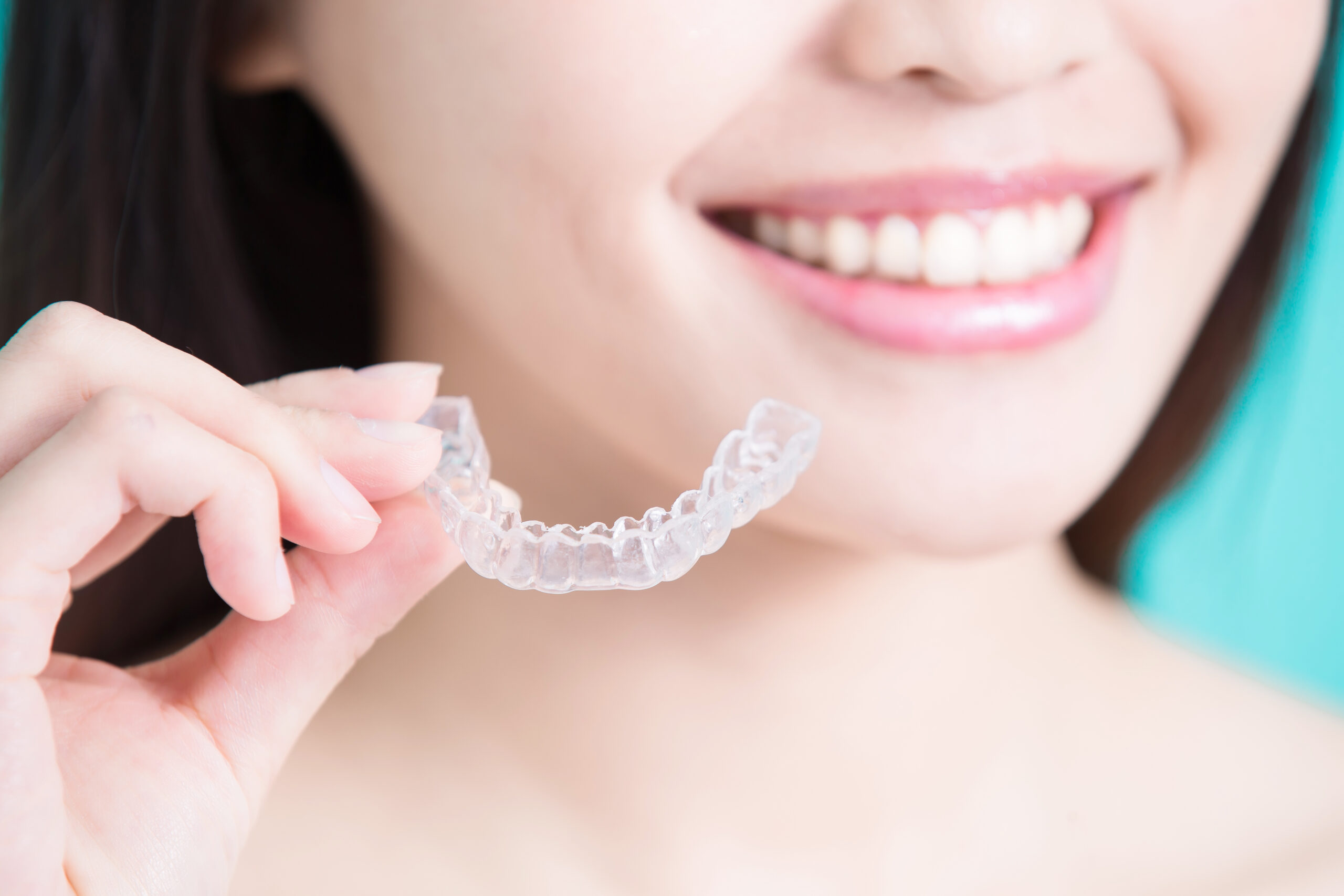
Using Your Aligners
You should be wearing your aligners for at least 22 hours each day. Take them out only to eat, drink, and brush. When aligners are not being worn, they should be placed in their case. This will protect them from loss or damage.
Each aligner bag in your treatment plan is numbered in order of use. The length of time you wear each aligner set will be determined by your orthodontist and the progress you make.
Understanding Your Aligners
Each aligner set comes in a personalized, identifying bag, labeled in order of use. Wear your aligner set for the time prescribed. Not following the timeline can adversely affect your results.
Sometimes your treatment plan may require attachments, clear/tooth-colored “buttons,” bonded to the teeth. They are custom-designed for specific tooth movements. Throughout treatment, some are removed and new ones are put on. Should one come off, please call the office to let us know.
Soreness and Unfamiliar Tooth Placement
Throughout the treatment plan, your teeth and bite may not feel the way they used to. This is happening because the teeth are slowly shifting into their new place. Sometimes there is a little pressure and discomfort, and sometimes there is not. It’s all a normal part of the process. Taking some ibuprofen or acetaminophen can help with these aches.
Your Speech with Aligners
For the first few days after you insert a new aligner, you may notice a lisp. This is common. Read or sing aloud to help your mouth adjust more quickly. Once your mouth adjusts to a new aligner, it typically goes away.
Mealtime and Beverages
You should always remove your aligners before eating or drinking anything other than water. We always recommend brushing before you put your aligners back in your mouth; however, if you cannot brush, rinse your mouth with water until you can.
Inserting Your Aligners
Before handling your aligners, make sure your hands have been washed. If it’s a new set, rinse them off after taking them out of the bag. Inspect each set to make sure there are no cracks or deformations.
Gently insert your aligners into your mouth with the concave side facing the teeth they are being inserted on. First, push the aligner over the front teeth, then apply equal pressure on the right and left sides of the mouth, moving towards the back until they snap over your molars. Upon initial placement, they can feel tight.
DO NOT bite your aligners into position.
Use the ‘chewies,’ (cotton rolls) we provide, every time you switch to a new set to help the aligners sit more comfortably in place. If you experience extreme discomfort with the new aligner, please return to your previous aligner and contact us for help.
TIP: When you switch to your new set of aligners, try to plan it for the evening. This gives your mouth quite a few hours of uninterrupted time for teeth movement to happen.
How do I know if my aligner belongs on the top or bottom set of teeth?
Some aligners come with a stamp on the biting surface indicating a ‘U’ for upper or an ‘L’ for lower. Typically, the teeth on the top are bigger than the teeth on the bottom.
Removing Your Aligners
Try to only remove aligners when eating, drinking, or cleaning. Removing aligners unnecessarily or excessively can weaken or damage them, prolonging treatment.
Remove the aligner one side at a time by pulling it down from the inside, then out toward the cheek. Do this on the other backside before moving towards the front. If you are having difficulty, we can provide you with a tool to help ease them out.
TIP: Put a reminder in your phone for when it’s time to switch aligners!
Care and Cleaning of Your Aligners
Ideally, gently clean your aligners with a soft toothbrush. If you cannot brush, rinse your aligners with cool water and store them in their case. DO NOT use hot water. This can warp the aligner and cause problems with it working properly.
Avoid abrasive cleaners as they can create microscopic grooves in the aligners, which can trap bacteria. Do not use denture cleaners as they have ingredients that can damage the material in the aligner. Cleaning with mouthwash is okay, but do not soak them in it.
Schedule regular dental checkups and cleanings for the continued health of your teeth and gums.
Break or Lose Your Aligner?
Always save your previous aligner sets (up to four) in case your current one is broken or lost. You can keep these sets in individually labeled plastic bags. If your current one breaks or is lost, immediately go back to wearing the previous set. This will prevent your teeth from shifting back to a previous stage in the process. Please give us a call as soon as it happens so we can order a replacement.
Still Have Questions?
Please contact any of our orthodontists, including our after-hours on-call orthodontist, for emergencies.
You can also check out our step-by-step video.

Notice
Some people may have an allergic reaction to the plastic aligner material. Please notify a health care professional if you feel this is happening to you.
Orthodontic appliances or parts of the appliances may be accidentally ingested. Please check over your appliance before you insert it in your mouth for any imperfections or cracks.
The Grand Finale – Your Retainer!
At the end of your orthodontic treatment plan, we will provide you with retainers to help maintain your new, beautiful smile. You’ll want to replace your retainers periodically as they can wear over time.
Your retainers are an important part of the process. If you do not wear them on a regular basis, you risk your teeth reverting back into their old areas. Your retainer can ensure that your new smile will remain in place.
During the first several months – as recommended by your orthodontist – wear your retainer for the same amount of time you’ve worn your aligners – at least 22 hours a day – except to eat, drink or brush. After that, you can wear them only while you’re sleeping. The timing of this can vary and be determined by your orthodontist.
Remember: If your retainers are not in your mouth, they should be in the case.